
How to read share of voice in AI answers
Abdul Rehman Baber · Nov 3, 2026
On 26 October 2026 a web-analytics tool appeared in 22 of 23 AI answers and had a 36.1% share of voice. What the two numbers mean, and what to do.

A worked example from Citestreak's research team.
22 of 23. On 26 October 2026, a web-analytics tool was named in 22 of the 23 AI answers to eight questions about web analytics. That is a visibility of 95.7%.
Its share of voice was 36.1%. Counting each tracked brand once per answer, the 23 answers held 61 mentions of the five tracked brands. The tool had 22 of them. Four rivals had the other 39.
Both numbers are right. Visibility says how often the AI names the brand. Share of voice says how much of the talk about the tracked brands is about this one.
Visibility and share of voice are counted differently. Our post How to read share of voice in AI answers explains how, with invented figures. This page shows the two numbers on a real day.
| Number | What it counts | The tool, on 26 October 2026 |
|---|---|---|
| Visibility | Answers that name the brand, out of all answers | 22 of 23 answers, 95.7% |
| Share of voice | The brand's mentions out of all mentions of tracked brands. A brand counts once per answer | 22 of 61 mentions, 36.1% |
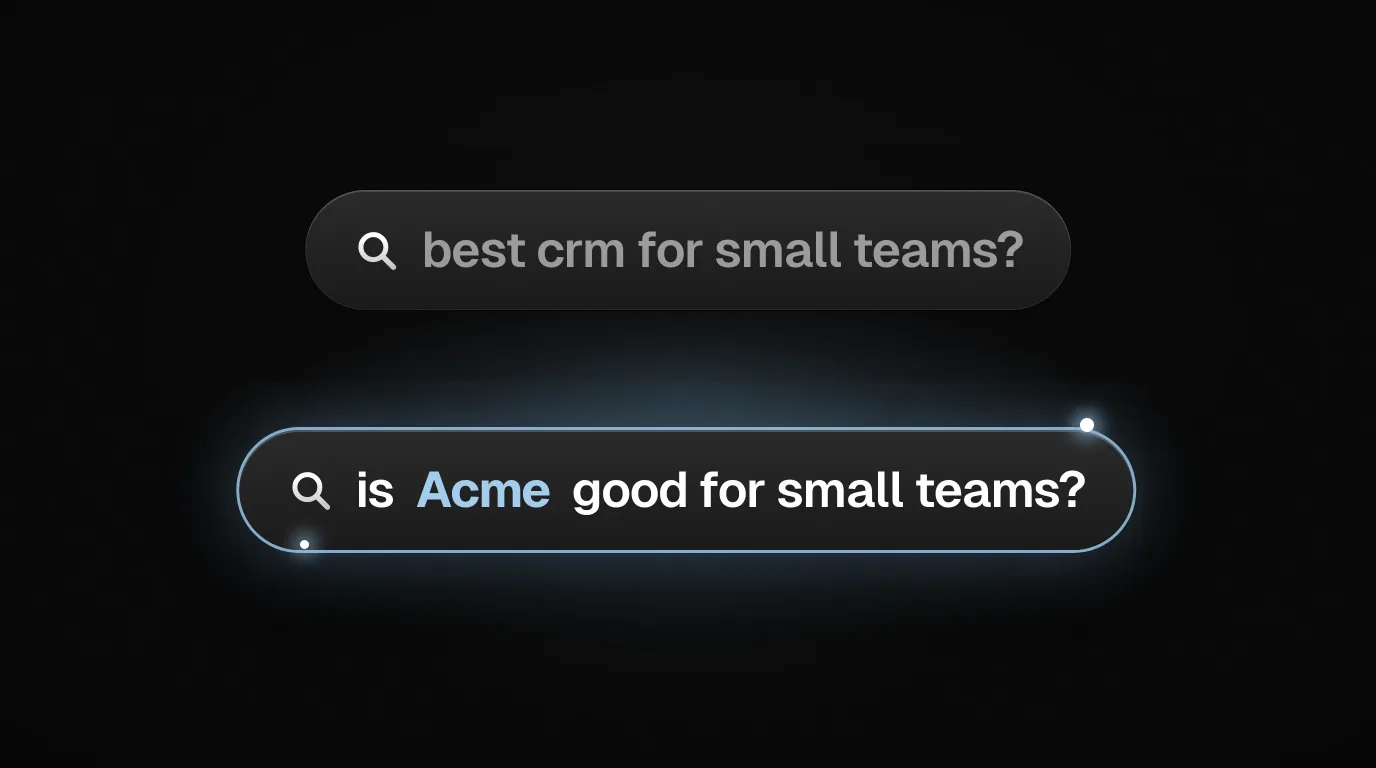
We grouped the answers by whether the question named the tool. Here is the split.
| Questions | Questions asked | Answers | Answers that named the tool |
|---|---|---|---|
| That name the tool | 2 | 6 | 6 (100%) |
| That leave its name out | 6 | 17 | 16 (94.1%) |
| All | 8 | 23 | 22 (95.7%) |
The two questions that named the tool gave 6 answers. The other six questions gave 17, because Google showed no AI Overview for one of them.
On the questions that left its name out, the tool was named in 16 of 17 answers, a visibility of 94.1%. That is under two percentage points below the overall 95.7%. The groups are small, so treat the figures as rough.
The tool was named in 22 answers, eight more than Rival A, the next most-named.
| Brand | Mentions (one per answer) | Share of voice |
|---|---|---|
| The web-analytics tool | 22 | 36.1% |
| Rival A | 14 | 23.0% |
| Rival B | 9 | 14.8% |
| Rival C | 9 | 14.8% |
| Rival D | 7 | 11.5% |
| All five | 61 | 100% |
A brand's mentions are the answers that named it, so each count is out of 23 answers. The displayed shares add up to 100.2% after rounding.
On average, an answer named about 2.7 of the five tracked brands. The four rivals made 39 of the 61 mentions, about 1.7 per answer. So the tool was in almost every answer, and on average each answer also named about 1.7 of its rivals.
A share of voice of 36.1% is what that looks like. The tool held about a third of the mentions, more than any rival. Four rivals held the rest.
Naming is one count. Citing your website is another: see How often do AI answers cite a brand's own website?
The definitions are in Metrics. In Citestreak, Chats shows the answers behind your own numbers.
Want these numbers for your own brand?
Apply for the betaHow to read share of voice in AI answers
Abdul Rehman Baber · Nov 3, 2026
Why branded prompts flatter your AI visibility score
Mordecai Machazire · Nov 25, 2026
How often do AI answers cite a brand's own website?
Abdul Rehman Baber · Nov 25, 2026